This profile has not been translated into English yet. It is shown in French, the reference language (automatic translation tools in your browser can help). Legal statuses and counts are shown in English.

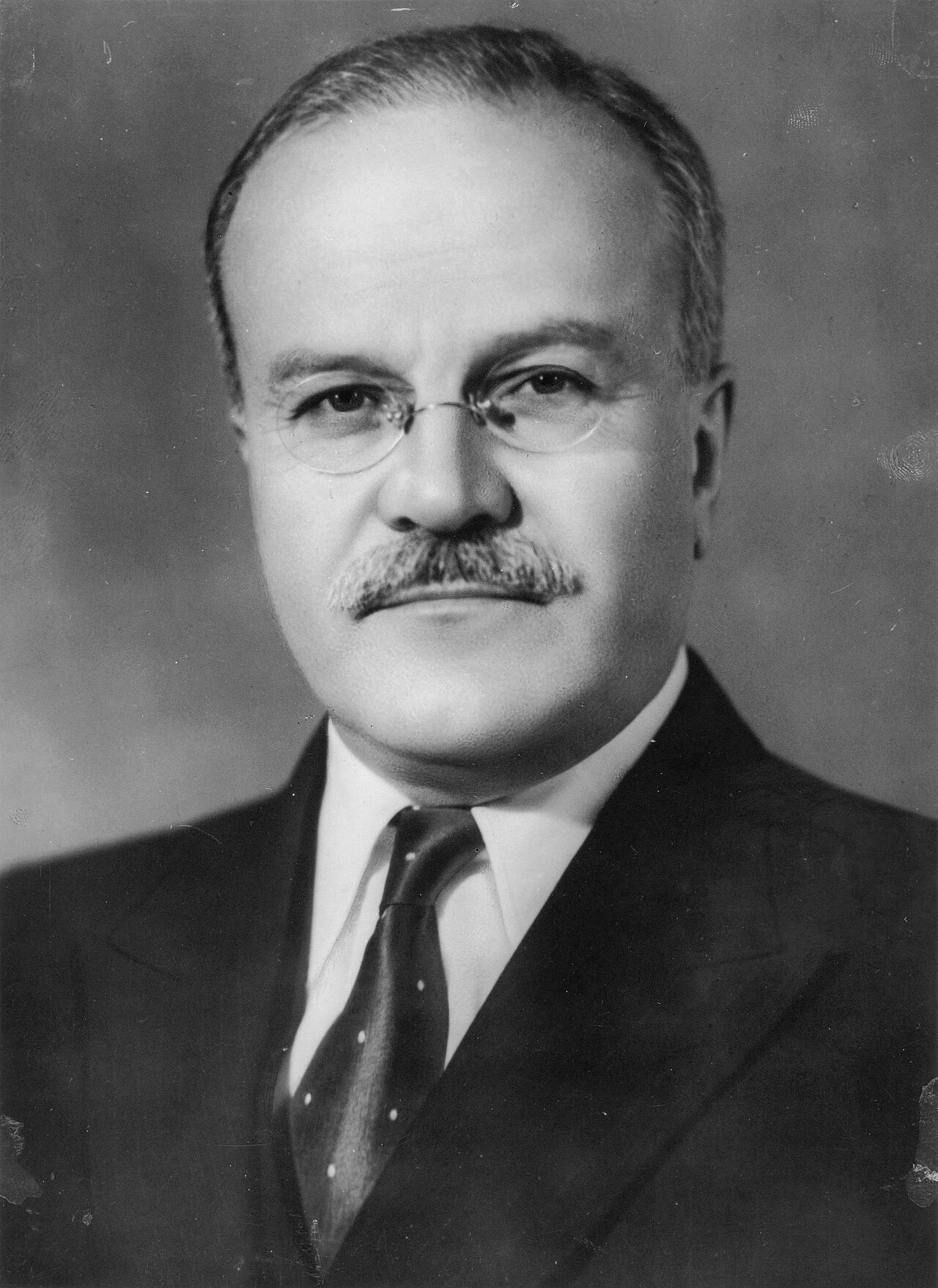
Portrait of Vyacheslav Molotov

Portrait: Wikidata/Wikimedia Commons — See Wikimedia Commons source page · source

Politique / gouvernement / diplomatie / répression

Vyacheslav Molotov

Fiche documentée couvrant 11 controverses, dont « 1928–1930 : purge des non-staliniens dans l'organisation du Parti à Moscou » et « 1930–1933 : responsabilité gouvernementale dans la collectivisation forcée et les politiques ayant accompagné la famine ».

Your opinion of this profile

Profile No. 2570 · Updated on 25 September 2026

11Documented controversies
13Sources
0Formal charge · all time
1Conviction

I. Documented controversies

01

1962–1984

1962–1984 : exclusion du Parti puis réintégration tardive malgré sa fidélité revendiquée au stalinisme

Status not specified

Not yet available in English — French original shown.

Après ses critiques persistantes de Khrouchtchev, Molotov est exclu du Parti et vit dans l'ombre. En 1984, à 94 ans, il est réadmis symboliquement.

Sources · 2

  1. [1]
    Encyclopedia of Russian History / Encyclopedia.comMolotov, Vyacheslav MikhailovichHigh reliability
  2. [2]

Last verified: 15 September 2026

02

juin 1957

1957 : participation à l'« Anti-Party Group » qui tente de renverser Khrouchtchev

No legal proceedings

Not yet available in English — French original shown.

Molotov, Malenkov et Kaganovich réunissent d'abord une majorité au Présidium pour écarter Khrouchtchev. Celui-ci porte l'affaire devant le Comité central, où ses adversaires sont battus et écartés de la direction.

Sources · 2

  1. [1]
    Encyclopedia of Russian History / Encyclopedia.comAnti-Party GroupHigh reliability
  2. [2]

Last verified: 15 September 2026

03

février–juin 1956

1956 : opposition à la déstalinisation et perte du ministère des Affaires étrangères

Status not specified

Not yet available in English — French original shown.

Très identifié à l'héritage de Staline, Molotov s'oppose à la nouvelle ligne de Khrouchtchev après le XXe congrès et perd le ministère des Affaires étrangères.

Sources · 2

  1. [1]
    Encyclopedia of Russian History / Encyclopedia.comMolotov, Vyacheslav MikhailovichHigh reliability
  2. [2]
    Encyclopedia of Russian History / Encyclopedia.comAnti-Party GroupHigh reliability

Last verified: 15 September 2026

04

1949–1953

1949–1953 : arrestation de son épouse Polina Jemtchoujina, que Molotov reconnaît avoir votée au Politburo

Status not specified

Not yet available in English — French original shown.

Polina Jemtchoujina, épouse de Molotov et ancienne responsable soviétique, est arrêtée et incarcérée dans le contexte des campagnes staliniennes de la fin des années 1940. Molotov admettra avoir voté au Politburo en faveur de son arrestation.

Sources · 1

  1. [1]
    Encyclopedia of Russian History / Encyclopedia.comMolotov, Vyacheslav MikhailovichHigh reliability

Last verified: 15 September 2026

05

novembre 1939–août 1940

1939–1940 : politique extérieure accompagnant la guerre contre la Finlande et l'annexion des États baltes et de territoires roumains

Status not specified

Not yet available in English — French original shown.

Sous le cadre géopolitique créé par le pacte de 1939, l'URSS attaque la Finlande puis occupe et annexe les États baltes et prend la Bessarabie et la Bucovine du Nord. Molotov est alors le chef de la diplomatie soviétique.

Sources · 2

  1. [1]
    United States Holocaust Memorial MuseumGerman-Soviet PactVery high reliability
  2. [2]
    Encyclopedia of Russian History / Encyclopedia.comMolotov, Vyacheslav MikhailovichHigh reliability

Last verified: 15 September 2026

06

5 mars 1940

1940 : approbation au Politburo de la proposition de Beria menant aux exécutions de Katyn

Status not specified

Not yet available in English — French original shown.

La note de Beria proposant la mise à mort de milliers de prisonniers et détenus polonais porte l'approbation de Molotov avec celles de Staline, Vorochilov et Mikoyan ; les exécutions suivent au printemps 1940.

Sources · 1

  1. [1]
    Sciences Po — Mass Violence and Resistance Research NetworkThe Katyń Massacres of 1940Very high reliability

Last verified: 15 September 2026

07

23 août 1939

1939 : négociation et signature du pacte germano-soviétique et de son protocole secret

Status not specified

Not yet available in English — French original shown.

Comme commissaire aux Affaires étrangères, Molotov négocie et signe avec Ribbentrop le pacte de non-agression germano-soviétique. Le protocole secret répartit des sphères d'influence en Europe orientale et prévoit le partage territorial de la Pologne.

Sources · 3

  1. [1]
    Yale Law School — Avalon ProjectNazi-Soviet Relations 1939-1941: Secret Additional ProtocolVery high reliability
  2. [2]
    United States Holocaust Memorial MuseumGerman-Soviet PactVery high reliability
  3. [3]
    Encyclopedia of Russian History / Encyclopedia.comMolotov, Vyacheslav MikhailovichHigh reliability

Last verified: 15 September 2026

08

17–28 septembre 1939

1939 : note à l'ambassadeur polonais puis formalisation du partage de la Pologne avec l'Allemagne nazie

Status not specified

Not yet available in English — French original shown.

Le 17 septembre, Molotov fait notifier que l'État polonais aurait cessé d'exister au moment où l'Armée rouge franchit la frontière orientale. Le 28 septembre, il signe les accords soviéto-allemands qui redéfinissent la frontière et organisent la coopération économique et territoriale.

Sources · 3

  1. [1]
    U.S. Department of State, Office of the HistorianForeign Relations of the United States — note of 17 September 1939 and Soviet entry into PolandVery high reliability
  2. [2]
    U.S. Department of State, Office of the HistorianForeign Relations of the United States, 1939 — Soviet-German agreements of September 1939Very high reliability
  3. [3]
    United States Holocaust Memorial MuseumGerman-Soviet PactVery high reliability

Last verified: 15 September 2026

09

1937–1938

1937–1938 : approbation de centaines de listes de condamnations durant la Grande Terreur

Conviction

Not yet available in English — French original shown.

Les listes d'exécutions conservées montrent Molotov comme l'un des dirigeants les plus actifs à les approuver, avec sa signature sur environ 372 listes selon les travaux archivistiques.

Sources · 2

  1. [1]
    Institut für Zeitgeschichte München-BerlinPolitical Justice under Stalin — 'The Lists' of Extrajudicial ConvictionsVery high reliability
  2. [2]
    Persée / Institut d'histoire du temps présentLes « opérations de masse » de la « Grande terreur » en URSS (1937-1938)Very high reliability

Last verified: 15 September 2026

10

1930–1933

1930–1933 : responsabilité gouvernementale dans la collectivisation forcée et les politiques ayant accompagné la famine

Status not specified

Not yet available in English — French original shown.

Président du Sovnarkom et proche lieutenant de Staline, Molotov participe à l'application de la collectivisation forcée. En 1932, il est envoyé en Ukraine pour accélérer des réquisitions céréalières déjà catastrophiques.

Sources · 3

  1. [1]
    Encyclopedia of Russian History / Encyclopedia.comMolotov, Vyacheslav MikhailovichHigh reliability
  2. [2]
    Электронная библиотека исторических документов / HistoryRussiaПисьмо В.М. Молотова И.В. Сталину о хлебозаготовках на Украине. 21 ноября 1932 г.Very high reliability
  3. [3]
    Encyclopedia of UkraineFamine-Genocide of 1932–3High reliability

Last verified: 15 September 2026

11

1928–1930

1928–1930 : purge des non-staliniens dans l'organisation du Parti à Moscou

Status not specified

Not yet available in English — French original shown.

Comme premier secrétaire du Parti à Moscou, Molotov élimine politiquement les cadres non alignés sur Staline et consolide l'appareil stalinien dans la capitale.

Sources · 1

  1. [1]
    Encyclopedia of Russian History / Encyclopedia.comMolotov, Vyacheslav MikhailovichHigh reliability

Last verified: 15 September 2026

II. Constellation of documented links

No documented link with another published profile for now.

A documented mention does not, on its own, prove a personal relationship.

III. Your opinion of this profile

One opinion per browser, which you can change at any time. It rates the quality of the profile, not the person.

IV. Has something changed?

A new court decision, a missing source, a mistake? Tell us what should be updated: every request is read by the editorial team.