This profile has not been translated into English yet. It is shown in French, the reference language (automatic translation tools in your browser can help). Legal statuses and counts are shown in English.

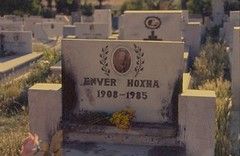
Portrait of Enver Hoxha

Portrait: Openverse / flickr — Only Tradition — by-nc-sa 2.0 · source

dictature communiste / stalinisme / purges / Sigurimi / persécution religieuse / isolement économique

Enver Hoxha

Fiche documentée couvrant 17 controverses, dont « 1944–1946 : installation d'un État communiste à parti unique et élimination du pluralisme politique » et « 1945 : tribunaux spéciaux et exécutions d'anciens responsables, opposants et figures non communistes ».

Your opinion of this profile

Profile No. 2051 · Updated on 25 September 2026

17Documented controversies
7Sources
0Formal charge · all time
0Conviction

I. Documented controversies

01

années 1940–1985

années 1940–1985 : répression systémique par le Sigurimi, prisons, travail forcé et exil intérieur

Status not specified

Not yet available in English — French original shown.

Sous Hoxha, l'Albanie développa un appareil de sécurité extrêmement intrusif. Opposants réels ou supposés furent emprisonnés, envoyés en camps de travail, internés administrativement ou exécutés.

Sources · 2

  1. [1]
    Human Rights WatchHuman Rights in Post-Communist AlbaniaVery high reliability
  2. [2]
    U.S. Department of State via ecoi.netCountry Report on Human Rights Practices for 1986 — AlbaniaVery high reliability

Last verified: 14 September 2026

02

années 1940–1985

années 1940–1980 : punition collective des familles de fugitifs et d'« ennemis » par internement administratif

Status not specified

Not yet available in English — French original shown.

Le régime appliqua l'internement non seulement à des opposants mais aussi à des proches de personnes ayant fui l'Albanie ou considérées comme politiquement dangereuses. Des familles entières purent être déplacées ou internées sans procès.

Sources · 2

  1. [1]
    U.S. Department of State via ecoi.netCountry Report on Human Rights Practices for 1986 — AlbaniaVery high reliability
  2. [2]
    Human Rights WatchHuman Rights in Post-Communist AlbaniaVery high reliability

Last verified: 14 September 2026

03

années 1960–1985

années 1960–1985 : interdiction quasi totale des voyages privés à l'étranger et criminalisation des tentatives de fuite

Status not specified

Not yet available in English — French original shown.

L'Albanie de Hoxha interdit pratiquement les voyages privés hors du pays. Les tentatives de franchissement illégal de la frontière pouvaient entraîner de lourdes peines et les familles des fugitifs subir représailles ou internement.

Sources · 2

  1. [1]
    Human Rights WatchHuman Rights in Post-Communist AlbaniaVery high reliability
  2. [2]
    U.S. Department of State via ecoi.netCountry Report on Human Rights Practices for 1986 — AlbaniaVery high reliability

Last verified: 14 September 2026

04

1944–1985

1944–1985 : isolement politique, social et économique laissant l'Albanie parmi les pays les plus pauvres et fermés d'Europe

Status not specified

Not yet available in English — French original shown.

L'addition des ruptures diplomatiques, de l'autarcie économique, de l'interdiction des voyages, de la censure et de la militarisation transforma l'Albanie en l'État le plus fermé du bloc européen. Human Rights Watch décrit le pays comme l'un des plus pauvres et répressifs d'Europe à la fin du régime.

Sources · 2

  1. [1]
    Human Rights WatchHuman Rights in Post-Communist AlbaniaVery high reliability
  2. [2]

Last verified: 14 September 2026

05

1981–septembre 1983

1981–1983 : dernière grande purge — arrestations, procès-spectacles et exécutions de Kadri Hazbiu et d'autres hauts responsables

Status not specified

Not yet available in English — French original shown.

Après la mort de Shehu, Hoxha fit tomber plusieurs ministres et hauts responsables accusés d'une vaste conspiration. Kadri Hazbiu, Feçor Shehu, Llambi Ziçishti et d'autres furent jugés ; plusieurs furent exécutés en 1983.

Sources · 1

  1. [1]
    East European Politics and Societies and CulturesEnver Hoxha’s Last Purge: Inside the Ruling Circle of Communist Albania (1981–1983)Very high reliability

Last verified: 14 September 2026

06

18 décembre 1981–1982

1981 : mort de Mehmet Shehu, puis effacement et dénonciation posthume du premier ministre comme « traître »

Status not specified

Not yet available in English — French original shown.

Le premier ministre Mehmet Shehu, allié de Hoxha depuis des décennies et numéro deux du régime, fut retrouvé mort. Le régime annonça un suicide, puis le transforma rapidement en « traître » et en chef d'une conspiration étrangère, effaçant son image et persécutant son entourage.

Sources · 2

  1. [1]
    U.S. Department of State, Office of the HistorianAlbania after Shehu: The Internal SceneVery high reliability
  2. [2]
    East European Politics and Societies and CulturesEnver Hoxha’s Last Purge: Inside the Ruling Circle of Communist Albania (1981–1983)Very high reliability

Last verified: 14 September 2026

07

1971–années 1980

1971–années 1980 : programme massif de bunkérisation du territoire, au coût économique très élevé

Status not specified

Not yet available in English — French original shown.

Craignant une invasion étrangère, Hoxha lança un programme de fortification qui conduisit à la construction de plus de 170 000 bunkers. Le projet absorba des ressources considérables dans un pays pauvre.

Sources · 1

  1. [1]
    Armed Forces Museum of AlbaniaBunkerizationVery high reliability

Last verified: 14 September 2026

08

1977–juillet 1978

1978 : rupture définitive avec la Chine et perte du dernier grand soutien économique extérieur

Status not specified

Not yet available in English — French original shown.

Hoxha dénonça la nouvelle politique chinoise comme révisionniste. Pékin interrompit en 1978 son aide économique et militaire et rappela ses experts, laissant l'Albanie sans allié majeur ni source comparable de soutien extérieur.

Sources · 1

  1. [1]

Last verified: 14 September 2026

09

1976 et suites

1976 : constitution interdisant crédits étrangers et investissements conjoints — verrouillage institutionnel de l'autarcie

Status not specified

Not yet available in English — French original shown.

La Constitution de 1976 durcit l'autarcie en interdisant notamment certains crédits étrangers, concessions et entreprises conjointes. Le système économique devint encore moins capable de mobiliser capitaux et technologies extérieurs.

Sources · 2

  1. [1]
  2. [2]
    Human Rights WatchHuman Rights in Post-Communist AlbaniaVery high reliability

Last verified: 14 September 2026

10

septembre 1968

1968 : retrait du Pacte de Varsovie après l'invasion de la Tchécoslovaquie

Status not specified

Not yet available in English — French original shown.

Après l'invasion de la Tchécoslovaquie par les forces du Pacte de Varsovie, Hoxha retira officiellement l'Albanie de l'alliance militaire.

Sources · 1

  1. [1]

Last verified: 14 September 2026

11

1946–1967

1946–1967 : collectivisation progressive de l'agriculture et suppression effective de la propriété privée rurale

Status not specified

Not yet available in English — French original shown.

Le régime collectivisa progressivement l'agriculture jusqu'à supprimer presque entièrement l'exploitation privée indépendante. La propriété et la transmission des terres furent drastiquement limitées puis socialisées.

Sources · 1

  1. [1]
    Human Rights WatchHuman Rights in Post-Communist AlbaniaVery high reliability

Last verified: 14 September 2026

12

février–novembre 1967

1967 : campagne visant à supprimer la pratique religieuse et proclamation de fait d'un État athée

Status not specified

Not yet available in English — French original shown.

Hoxha encouragea une campagne de fermeture des mosquées, églises et monastères. Plus de deux mille lieux religieux furent fermés ou transformés, les communautés perdirent leur statut légal et des membres du clergé furent humiliés, emprisonnés ou persécutés.

Sources · 2

  1. [1]
    Amnesty InternationalAlbania — Amnesty International report on law and religionVery high reliability
  2. [2]
    Human Rights WatchHuman Rights in Post-Communist AlbaniaVery high reliability

Last verified: 14 September 2026

13

1960–1961

1961 : rupture avec l'Union soviétique après la déstalinisation et isolement accru du pays

Status not specified

Not yet available in English — French original shown.

Hoxha refusa la déstalinisation de Khrouchtchev et rompit progressivement avec Moscou. L'Albanie se rapprocha alors de la Chine tout en maintenant une ligne stalinienne particulièrement rigide.

Sources · 2

  1. [1]
    Human Rights WatchHuman Rights in Post-Communist AlbaniaVery high reliability
  2. [2]

Last verified: 14 September 2026

14

1948–11 juin 1949

1948–1949 : rupture avec la Yougoslavie, purge de Koçi Xoxe et exécution de l'ancien numéro deux

Status not specified

Not yet available in English — French original shown.

Après la rupture Tito-Staline, Hoxha se retourna contre la faction pro-yougoslave. Koçi Xoxe, ancien ministre de l'Intérieur et figure majeure du régime, fut arrêté, jugé et exécuté en 1949.

Sources · 2

  1. [1]
    East European Politics and Societies and CulturesEnver Hoxha’s Last Purge: Inside the Ruling Circle of Communist Albania (1981–1983)Very high reliability
  2. [2]
    Human Rights WatchHuman Rights in Post-Communist AlbaniaVery high reliability

Last verified: 14 September 2026

15

1947

1947 : procès du « groupe des députés » et élimination d'une opposition parlementaire résiduelle

Status not specified

Not yet available in English — French original shown.

Des députés et intellectuels issus du Front démocratique furent accusés de conspirations contre le régime, condamnés à mort ou à de lourdes peines après des enquêtes marquées par la torture et des aveux forcés selon de nombreux témoignages historiques.

Sources · 1

  1. [1]
    Human Rights WatchHuman Rights in Post-Communist AlbaniaVery high reliability

Last verified: 14 September 2026

16

1944–1946

1944–1946 : installation d'un État communiste à parti unique et élimination du pluralisme politique

Status not specified

Not yet available in English — French original shown.

Après la victoire des communistes à la fin de la Seconde Guerre mondiale, Hoxha consolida un régime de parti unique. Les institutions indépendantes, l'opposition et la presse libre furent progressivement éliminées.

Sources · 1

  1. [1]
    Human Rights WatchHuman Rights in Post-Communist AlbaniaVery high reliability

Last verified: 14 September 2026

17

mars–avril 1945 et suites

1945 : tribunaux spéciaux et exécutions d'anciens responsables, opposants et figures non communistes

Protagonist not prosecuted

Not yet available in English — French original shown.

Protagonist not prosecuted — these proceedings are not counted in their formal charges or convictions.

Le nouveau régime organisa des tribunaux spéciaux contre des responsables de l'ancien État, collaborateurs présumés et adversaires politiques. Plusieurs condamnations à mort et de très lourdes peines furent prononcées dans un environnement où l'indépendance judiciaire était inexistante.

Role of the person profiled
Protagonist not prosecuted

Sources · 1

  1. [1]
    Human Rights WatchHuman Rights in Post-Communist AlbaniaVery high reliability

Last verified: 14 September 2026

II. Constellation of documented links

Each link refers to an imported relation or to a documented mention in a profile. A documented mention does not, on its own, prove a personal relationship.

List of documented links
  1. Progressive1 reference
    • Mentioned in “1946–1967 : collectivisation progressive de l'agriculture et suppression effective de la propriété privée rurale” — Enver Hoxha's profile cites Progressive.
  2. Sali Berisha1 reference
    • Cross-mention: “1968-1990 : appartenance au Parti du travail sous le régime communiste et polémique récurrente sur son parcours avant 1990” — Sali Berisha's profile cites Enver Hoxha.

III. Your opinion of this profile

One opinion per browser, which you can change at any time. It rates the quality of the profile, not the person.

IV. Has something changed?

A new court decision, a missing source, a mistake? Tell us what should be updated: every request is read by the editorial team.